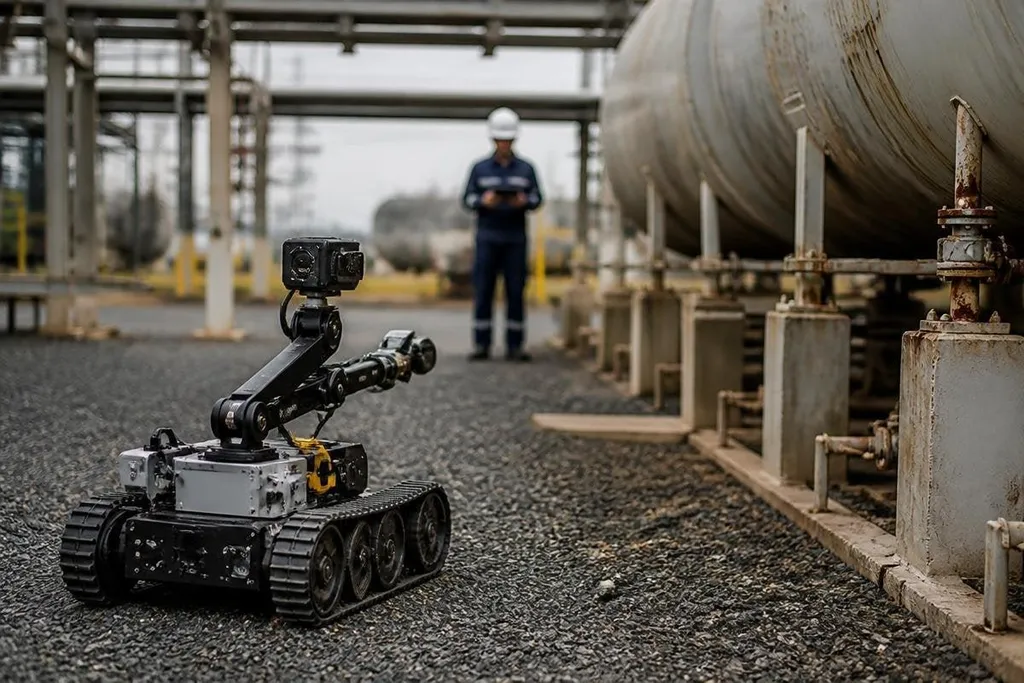
An inspection robot earns its place when it collects useful evidence without sending a person into a risky, costly, or hard-to-reach area. That creates business opportunities in robot sales, inspection services, software, and repairs, but each one depends on a clear buyer problem.
- Robot sales: Sell the machine to sites with repeated inspection work.
- Inspection services: Run the robot for clients that want results without owning equipment.
- Data software: Turn images, readings, and reports into records people can act on.
Where the work starts
The first opportunity sits in places where inspection happens often and access is difficult. A ground robot can move through a plant, tunnel, yard, or construction site.
A drone can inspect roofs, towers, and other high structures. An underwater robot can collect images from submerged equipment.
The machine does not need to remove every site visit to make a difference. If it checks the same route before a worker arrives, the team can send people only when the images or sensor readings point to a problem.
That changes the sale. A buyer may care less about the robot itself than about fewer climbing jobs, shorter shutdowns, or a better record of equipment condition. The seller needs to connect the robot's task to one of those costs.
Four ways companies can earn money
Robot makers can sell the hardware, but the sale may be the smallest part of the long-term business. Inspection work creates repeat demand because sites need checks again after a repair, weather event, production change, or set time period.
A company can sell the equipment with setup, training, spare parts, and repairs. It can rent the robot for a project, or run the inspection itself with a trained operator who collects the data and writes the report.
Software adds another revenue stream. Teams can store inspection records, compare new images with old ones, and assign follow-up work. A supplier can also connect the robot with maintenance, safety, or asset records.
The service model can suit companies that want inspection results but lack robotics staff. The ownership model can make more sense for a site with the same routes and checks every week.
An inspection robot earns its cost only when its route produces records a team can use. For a site manager comparing business models, Robot24.com can add the machine, test setting, task, and date behind each claim. The next decision sits in the data: who owns it, how long it stays, and what work it supports.
The data matters more than the patrol
A robot that drives around and stores images has limited business value if nobody can find the fault or decide what to do next. The useful product is the chain that turns a visit into a decision: the robot reaches the area, records the condition, flags a change, and sends a report to the team that owns the asset.
That chain can include thermal cameras, gas sensors, LiDAR, or ultrasonic tools. Each sensor adds a cost, so the supplier needs to show what decision the reading supports.
A thermal image may point to a hot connection. A gas reading may call for a controlled shutdown or a closer check by a trained worker.
The record also gains value over time. Repeated images from the same location can help a maintenance team see whether a crack, leak, or hot spot is changing.
The business case stays weak if the system creates more files without reducing inspection work or helping people act sooner.
Where the business case breaks
Inspection robots still need people. Someone must plan routes, check sensor readings, recover the machine after a fault, and decide whether a finding needs repair.
A site may also need new safety rules, network coverage, charging space, and permission to operate around workers or vehicles. Those added tasks belong in the price before a buyer compares the robot with a manual visit.
The robot can struggle with stairs, mud, dust, glare, water, poor network access, or changing layouts. A drone may need an approved flight area. An underwater robot may lose a clear view when water carries silt.
Those limits can turn a short inspection into a manual job. The buyer also needs to ask who accepts responsibility for the report.
If a robot misses damage, the contract should state what the service checks, what the sensors can detect, and when a human inspection is still required. A polished report cannot fix weak evidence.
A practical buying checklist
Before starting a pilot, check these points:
- Name the repeated task: Write down the route, inspection time, access risk, and required output.
- Set the proof standard: Decide which image, measurement, or sensor result counts as a useful finding.
- Price the full setup: Include operators, training, repairs, software, charging, network work, and data storage.
- Test the hard area: Run the robot where dust, stairs, glare, water, or weak signals cause trouble.
- Set the human handoff: Record who reviews findings and who approves a repair or shutdown.
- Choose the payment model: Compare ownership, rental, and inspection service costs over the period you plan to use them.
I'd start with one repeated route and one measurable result, such as fewer manual entries or fewer high-risk visits. That gives the buyer a fair test without pretending a robot can inspect every asset on a site.
The next business opportunity will belong to suppliers that can price the work needed after the first image, including the repair decision, rather than selling patrol time alone.