
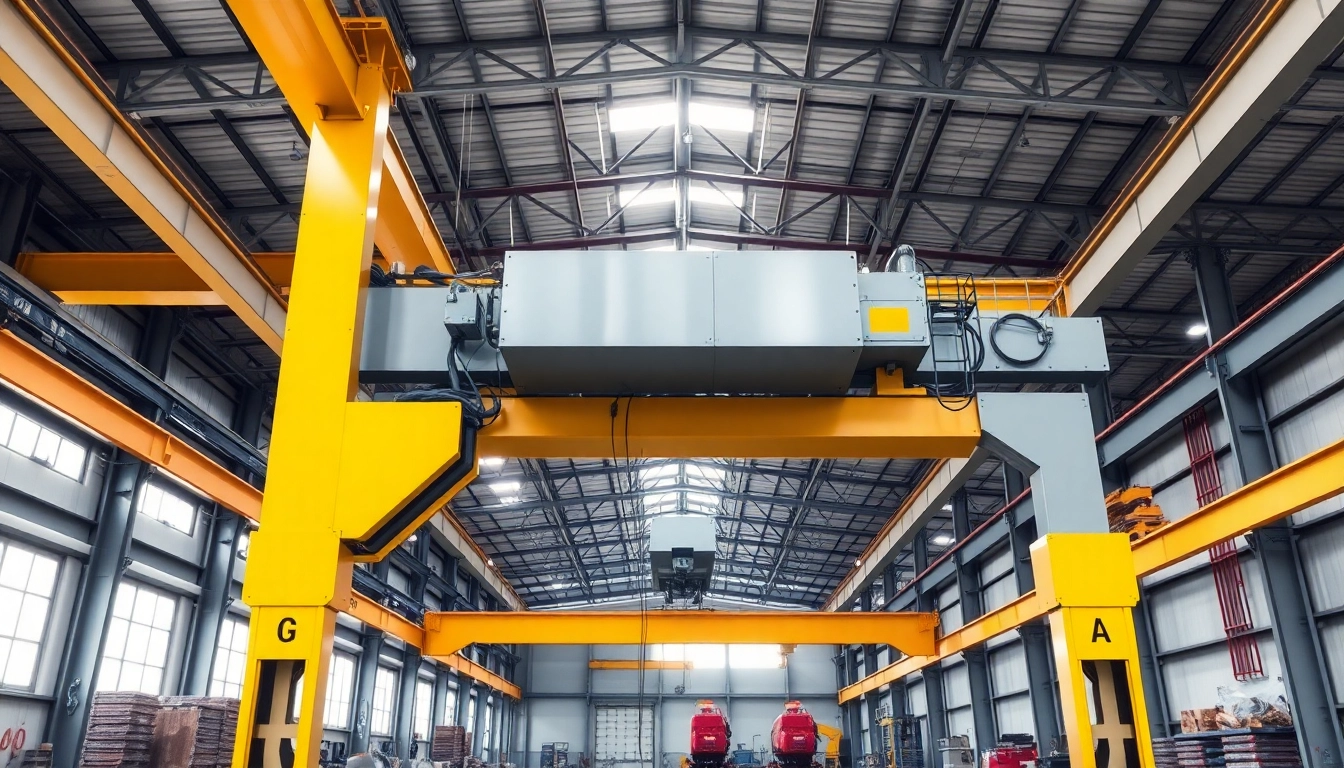
Understanding Bridge Cranes: Essentials for 2025
Bridge cranes, also known as overhead cranes, are crucial in various industrial settings, facilitating the efficient movement of heavy loads. These cranes span a significant area, allowing operators to transport materials across factory floors with ease. As industries evolve and demand for productivity increases, understanding the essentials of bridge cranes becomes imperative for businesses. Bridge cranes offer advanced lifting solutions that can enhance operational efficiency and safety in workplaces.
What is a Bridge Crane?
A bridge crane is a type of overhead crane that comprises a bridge beam, which travels along two parallel runways. Typically used in manufacturing and warehousing environments, bridge cranes can lift and move heavy materials across vast spaces, making them invaluable in settings where large equipment is needed for efficient operations. Unlike traditional cranes, bridge cranes are fixed installations, allowing for a more permanent and reliable solution for lifting heavy payloads.
Types of Bridge Cranes Explained
Bridge cranes can be categorized into several types, each designed for specific operational needs. The most common types include:
- Single Girder Bridge Cranes: These cranes consist of one bridge girder that spans the distance between two runways, suitable for lighter loads.
- Double Girder Bridge Cranes: Utilizing two girders, these cranes are designed for heavier loads and offer increased lifting capacity and stability.
- Top Running Cranes: These cranes run on top of the runway beams and are ideal for large industrial spaces.
- Underhung Cranes: These cranes run underneath the runway beams, providing a solution for facilities with limited vertical space.
- Articulating Bridge Cranes: These cranes offer mobility and flexibility, allowing for complex maneuvers in constricted spaces.
Key Components and Their Functions
Bridge cranes are composed of several key components that work in unison to achieve efficient lifting and movement:
- Bridge Beam: The main horizontal component that supports the hoist and connects the runways.
- Runways: The parallel tracks on which the bridge travels, typically mounted on the building structure.
- Hoist: The lifting mechanism that raises and lowers loads, which can vary in capacity and type (electric, manual, etc.).
- Controls: The operator interface that includes buttons and levers for controlling the crane’s movements.
- End Trucks: These attach the bridge to the runways, enabling movement along the tracks.
Benefits of Using a Bridge Crane in Industry
Bridge cranes provide numerous advantages to industrial operations, making them a popular choice among manufacturers and warehouses.
Increased Lifting Capacity and Efficiency
One of the primary benefits of bridge cranes is their substantial lifting capacity. Depending on the design, bridge cranes can handle loads exceeding several tons. This capability enhances operational efficiency, allowing businesses to move heavy materials quickly and reduce downtime caused by manual lifting. In addition, the operation of bridge cranes can be automated, further streamlining processes.
Improved Safety Features in Modern Designs
Modern bridge cranes come equipped with advanced safety features, including load sensors, emergency stop buttons, and collision detection systems. These innovations help prevent accidents and ensure a safe working environment for operators. Additionally, regular maintenance schedules and updates to safety systems keep the cranes compliant with industry standards, minimizing risks associated with heavy lifting.
Cost-Effectiveness Over Time
Investing in a bridge crane can result in significant cost savings over time. While the initial investment may be substantial, the efficiency gains often lead to lower operational costs. With reduced labor costs and increased productivity, businesses can achieve a higher return on investment. Furthermore, longevity and durability mean that these cranes can operate for years with minimal repairs.
Choosing the Right Bridge Crane for Your Needs
Selecting the ideal bridge crane requires careful consideration of specific operational needs and constraints. Understanding these needs can lead to better decision-making and effective investments.
Assessing Your Lifting Requirements
Before selecting a bridge crane, businesses should assess their lifting requirements, including the maximum load weight, lift height, and span width. This assessment ensures that the selected crane meets operational demands while maintaining safety standards.
Customization Options Available
Many manufacturers offer customization options to tailor bridge cranes to specific operational needs. Customizations can include modified lifting capacities, specialized controls, or additional safety features. Collaborating with crane manufacturers can yield solutions that enhance efficiency and safety.
Common Misconceptions About Bridge Cranes
Despite their widespread use, several misconceptions about bridge cranes persist. One common myth is that all bridge cranes require extensive installation and maintenance. In reality, many modern designs are engineered for quick installation and require minimal upkeep when properly maintained. Understanding these misconceptions helps businesses make informed decisions about crane investments.
Installation and Maintenance Best Practices
Proper installation and maintenance are crucial to the longevity and efficiency of bridge cranes. Following best practices can minimize issues and ensure optimal performance.
Site Preparation and Requirements
Before installing a bridge crane, thorough site preparation is essential. This includes assessing the structural integrity of the building, ensuring adequate clearance for crane operation, and confirming that the electrical supply meets the crane’s requirements. Proper planning prevents complications during installation.
Regular Maintenance Scheduling
Establishing a regular maintenance schedule is vital for the safe operation of bridge cranes. Regular inspections of components such as the hoist, controls, and safety systems can identify potential issues before they evolve into costly repairs. Additionally, following manufacturer recommendations for service intervals can extend the life of the crane.
Upgrading Components for Longevity
As technology advances, upgrading crane components can enhance functionality and safety. Investing in modern hoists, smart control systems, or safety upgrades can provide companies with better performance and compliance with evolving regulations.
Future Trends in Bridge Crane Technology
The bridge crane industry is poised for significant advancements as technology continues to evolve. Embracing these trends can lead to more innovative solutions and operational efficiencies.
Automation and Smart Technology Integration
Automation is a significant trend in the bridge crane sector. Integrating smart technologies, such as IoT devices and AI-powered controls, allows for real-time data monitoring and enhanced operational efficiencies. Automated systems can mitigate human error and streamline lifting processes, leading to increased safety and productivity.
Sustainability Practices in Crane Manufacturing
As industries pursue sustainability, manufacturers are adopting eco-friendly practices in crane design and production. This includes using recyclable materials, energy-efficient systems, and minimizing waste during manufacturing. Sustainable practices not only benefit the environment but also appeal to increasingly eco-conscious consumers.
Predictions for Bridge Crane Development by 2030
The future of bridge cranes promises exciting developments. By 2030, it is anticipated that advancements in materials science will lead to lighter yet stronger crane designs, improving efficiency and load capacity. Additionally, the integration of augmented reality for operator training and maintenance will revolutionize how crane operators are trained, leading to safer and more effective operations.